Ending Structural Racism at NIH
In search of clinician-scientists to review grant applications
New NEI program aims to increase pool of qualified reviewers
January 3, 2022
About 25,000 volunteers review the roughly 80,000 grant applications submitted to NIH each year. The process, which tags the best proposals with the highest potential for making an impact, is the bedrock of NIH’s success. And reviewing grant applications is one of the best ways to acquire grant-writing skills, particularly for early-stage investigators.
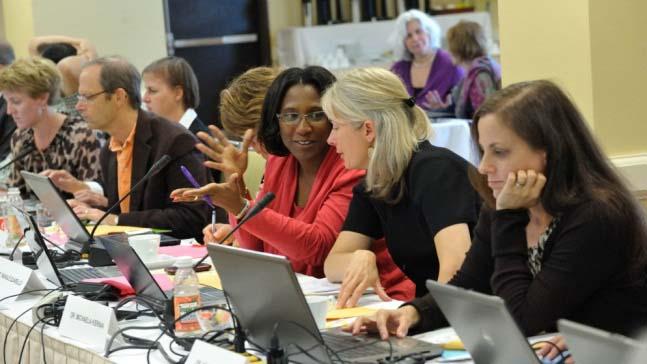
NEI launched the Clinician Scientist Reviewer Program to increase the pool of qualified clinician scientists eligible to serve as reviewers on NEI special emphasis panels. Program participants will strengthen their grasp of the peer review process while gaining working knowledge of the various NIH grant mechanisms. Importantly, the program will facilitate networking with NEI program staff and fellow reviewers. An additional goal of the program is to increase participation of individuals from underrepresented groups.
To qualify for the program, applicants must have completed all fellowship/ postdoctoral training and be actively involved in research. After attending a brief orientation, participants are assigned one to three grant applications along with instructions for how to review them and develop critiques in preparation for review meetings. Check out additional criteria and other details about how to apply for this new program on the NEI website. And please share with young scientists that you think would benefit from the program.
Michael F. Chiang, M.D.
DIVRO: Encouraging diversity through summer internships
November 2, 2021
Encouraging diversity is more than doing the right thing. It makes science better by incorporating unique perspectives, strategies, and solutions.
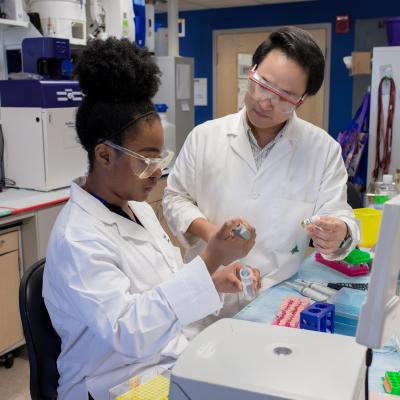
The NEI launched the Diversity in Vision Research and Ophthalmology summer internship program in 2011 to address the underrepresentation of specific communities in science. Our hope was that we could persuade talented young people to pursue careers in vision research if we offered them a hands-on experience that tempted their curiosity and helped them tap into the vision research community.
A decade later, we’re seeing our efforts pay off. DIVRO has supported more than 80 summer interns. Nearly half were college students. About a quarter were medical school students, with the remainder a mix of high school and graduate students.
Modupe Adetunji joined NEI for summers during and after her undergraduate training at Princeton University. She worked in the Laboratory of Retinal Cell and Molecular Biology with Stanislav Tomarev. With Tomarev and colleagues, she authored a 2017 paper on the neuroprotective effects of platelet-derived growth factorThis link is external to nei.nih.gov and will open in a new browser window or tab. in a mouse model of glaucoma. She returned to NEI briefly after her first year of medical school at the University of Pennsylvania. She is now an ophthalmology resident at Duke University.